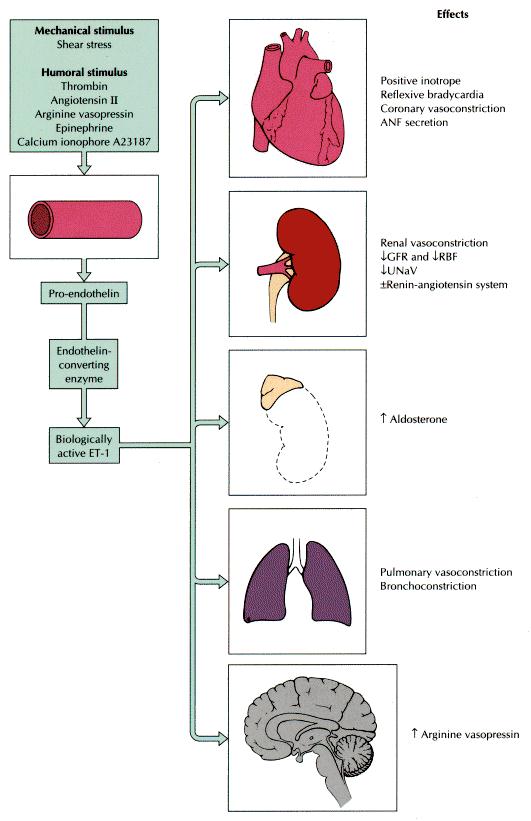
Figure 6-39. Summary of the stimuli for endothelin secretion and effects of endothelin in several organs. Mechanical (shear stress) and humoral (thrombin, angiotensin II, vasopressin, epinephrine, calcium ionophore A23187) stimuli may cause the release of endothelin-1 (ET-1). Endothelin increases circulating levels of atrial natriuretic factor (ANF), vasopressin and aldosterone. It also modulates renin release. Endothelin has a positive inotropic effect and produces coronary and systemic vasoconstriction. These responses produce an increase in blood pressure that is associated with a reflex decrease in heart rate. ET-1 constricts human pulmonary resistance vessels and has a potent bronchoconstrictor effect. Furthermore, ET-1 causes renal vasoconstriction, leading to a reduction in renal blood flow (RBF) and glomerular filtration rate (GFR) and a decrease in urinary sodium excretion (UNaV). ( Adapted from Underwood and coworkers [29] ; with permission.)